Oversized loads take a toll on Texas bridges
Nov. 17, 2026
By Ryan LaFontaine
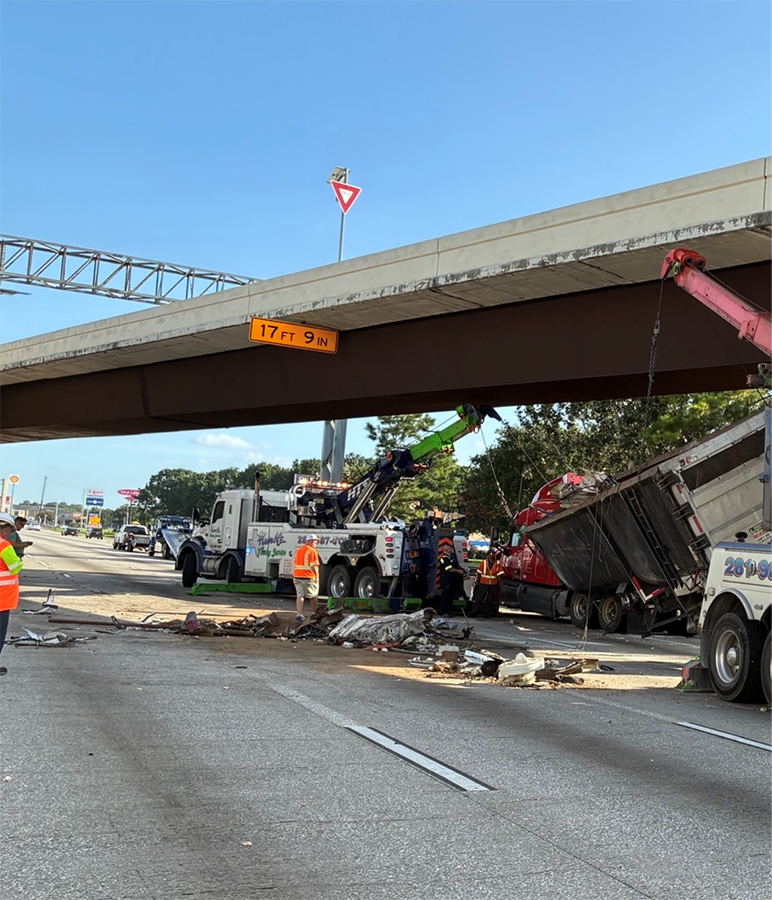
AUSTIN – A truck carrying an oversized load can do more than disrupt traffic when it hits a bridge. The impact can damage critical structural components, trigger lane closures and set off a lengthy repair process.
TxDOT records dozens of bridge strikes each year. The actual number is likely much higher than what is reported, because some impacts go unreported or are discovered during routine bridge inspections.
In one case, the Houston Avenue bridge near I-10 in Houston has been hit six times so far this year, and 16 times since January 2025.
TxDOT identified 30 instances of suspected unreported impact damage during routine bridge inspections conducted in 2025. Another 61 instances were identified in inspections completed so far in 2026. Because the damage may have occurred at any point since the previous inspection, TxDOT estimates around 45 unreported strikes may have occurred in 2025.
The Fort Worth area had the most with 8 reported strikes last year.
Oversized loads pose a risk
Bridge strikes typically occur when a truck or its load exceeds the available vertical clearance of a bridge. The risk increases when drivers fail to follow approved routes or travel without required permits.
Vehicles and loads exceeding legal size or weight limits generally need an oversize/overweight permit and an approved route from the Texas Department of Motor Vehicles (TxDMV) before traveling on state roads.
Drivers and carriers can find permit information through the TxDMV Oversize/Overweight Permits webpage. Following an approved route is critical because some roads and bridges are not designed to accommodate every oversized load.
When a driver is responsible for a strike, TxDOT can pursue a liability claim to recover taxpayer funds lost because of the collision.
From impact to repair
When a bridge strike is reported, TxDOT crews must first determine the extent of the damage and whether the structure can safely remain open to traffic.
In the Houston area, inspectors are dispatched to document damage, photograph affected areas and share findings with local administrators and bridge engineers.
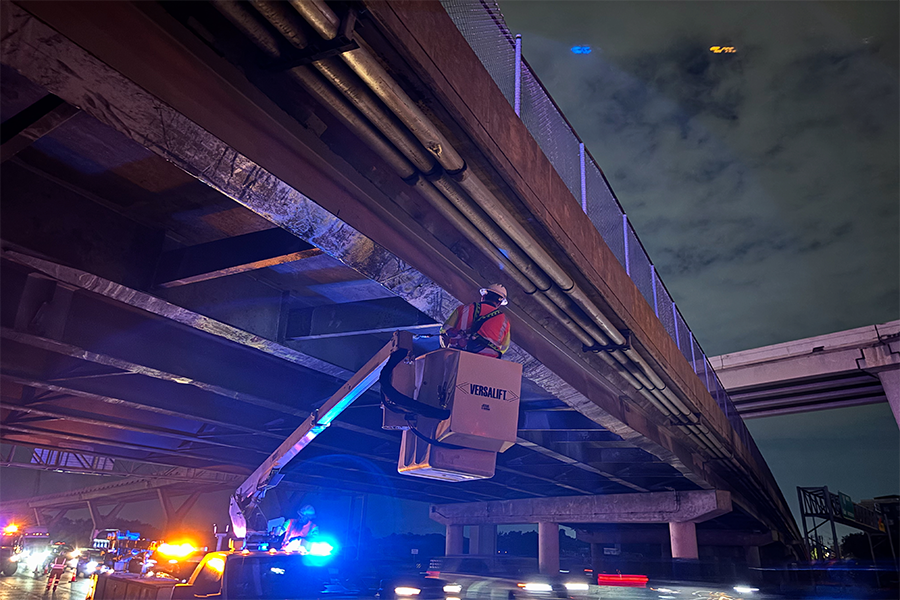
Maintenance teams establish traffic control, and engineers may visit the site to assess immediate safety concerns or conduct a closer inspection using a bucket truck.
The process can involve hours of fieldwork, documentation and coordination among multiple teams.
“Engineers determine which bridge beams were damaged, the type and extent of the damage, and what repairs are necessary,” said Ryan Eaves, field operations section director in TxDOT’s Bridge Division. “Depending on the severity and location of the impact, TxDOT may close shoulders or additional lanes while crews assess the structure and develop a repair plan.”
Damaged concrete beams require special attention. Crews remove loose concrete and may install a protective covering made of chicken wire and a tarp secured around the beam. The covering helps prevent additional concrete from falling onto traffic below, until a permanent repair can be completed.
For steel beams, crews also assess damage to any concrete connected to the bridge deck.
Once the damage is documented, district staff or TxDOT's Bridge Division develop repair plans.
Major damage to heavily traveled bridges creates additional challenges. Design and construction contracts must move quickly to minimize disruptions, and repairs often take place at night or on weekends. Those compressed schedules and specialized work can significantly increase costs.
Technology and infrastructure improvements
TxDOT districts are taking steps to reduce the risk of repeat strikes at vulnerable bridges.
Some districts have installed over-height detection systems that warn drivers when their vehicles or loads are approaching a bridge with insufficient clearance. In the Odessa area, TxDOT has installed systems at 19 structures.
The technology can help alert drivers before they reach a bridge, but its effectiveness depends on drivers recognizing the warning and taking action.
For bridges with repeated impacts, TxDOT may also pursue projects to strengthen or replace the structure or increase its clearance.
One example is the Houston Avenue bridge in Houston. The bridge is tentatively scheduled for demolition beginning in early 2027, with completion estimated for mid-2028. The project will demolish and reconstruct the bridge so the roadway runs underneath I-10, addressing the existing conflict with oversized and heavy truck traffic.
Preventing bridge strikes helps protect critical infrastructure, reduce unexpected closures and keep Texas traffic moving. For commercial drivers, knowing a vehicle's height, securing the proper permits and following approved routes are essential steps in avoiding a costly collision.