Texas and Oklahoma announce data sharing agreement
June, 29, 2026
By Staff
TxDOT and the Oklahoma Department of Transportation (ODOT) today announced the successful execution and implementation of a bi-state data sharing agreement designed to enhance traffic operations, improve traveler information, and strengthen coordination across state lines.
The agreement enables real-time, system-to-system exchange of critical transportation data along key corridors connecting Texas and Oklahoma, marking a major step forward in regional collaboration and intelligent transportation systems.
“This partnership demonstrates what is possible when states work together to deliver better outcomes for the traveling public,” said TxDOT Executive Director Marc Williams. “By sharing data across state lines, we are improving situational awareness, supporting faster response to incidents, and providing more reliable travel information.”
“This collaboration lays the foundation for a more connected and resilient transportation network across our region,” said ODOT Secretary of Transportation Tim Gatz. “By aligning our systems and sharing critical data, we are better equipped to serve the public and respond to both everyday conditions and emergency situations.”
"This kind of real-time cross-state data integration which aligns masterfully with USDOT's National Digital Corridors Initiative (DCI) is exactly the type of innovation needed to modernize our nation’s transportation systems,” said U.S. Department of Transportation Assistant Secretary Seval Oz. "By enabling seamless data exchange across state lines, Texas and Oklahoma are setting a strong example for how collaboration and technology can deliver smarter infrastructure and more consistent traveler experiences nationwide.”
Through this agreement, the agencies are sharing a comprehensive set of transportation data, including:
- Traffic camera status and imagery
- Incident data such as crashes, stalled vehicles, and roadway hazards
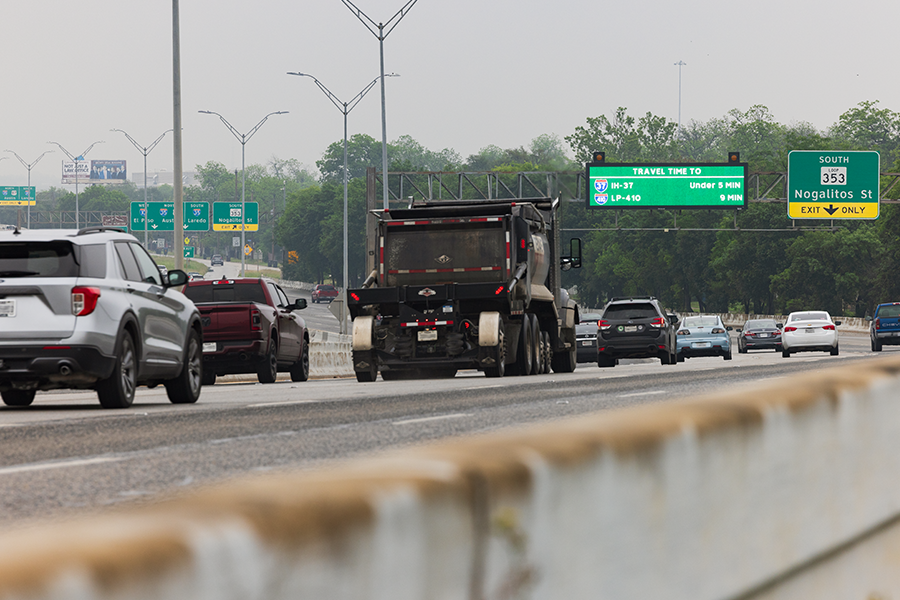
- Dynamic message sign (DMS) status and messaging
- Traffic flow data including speeds, volumes, and lane-level conditions
- Lane closures and work zone information
- Travel time data
- Environmental sensor data
This exchange is powered through a center-to-center (C2C) data connection, allowing both agencies to integrate and visualize shared information within their respective traffic management systems.
The agreement was implemented in time to support increased travel demand during the World Cup, demonstrating the ability of both agencies to rapidly deploy innovative solutions through coordinated effort.
In addition to current capabilities, both agencies are exploring future enhancements to expand the value of the partnership, including:
- Truck parking availability information
- Freight corridor restrictions and routing data
- Special event traffic coordination
- Emergency and evacuation route data
Travelers are already benefiting from improved visibility into traffic conditions along shared corridors, with additional enhancements planned as the partnership evolves.